
Case Study
The Engineering Lesson Alwyn Tan Still Uses Eighteen Years Later
How a Mallon programme in 2008 still shapes how one engineer works in 2026.
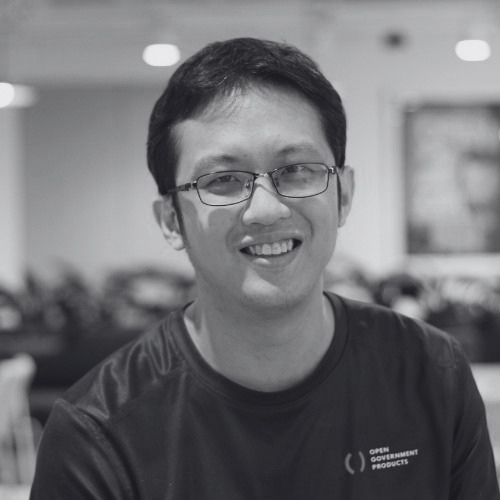
Alwyn Tan, Developer Relations at Open Government Products
In 2008, Alwyn Tan was a graduate engineer at the start of his career. His employer enrolled him in a Mallon programme in New York. Eighteen years later, after roles spanning engineering and Developer Relations, he leads Developer Relations at Open Government Products (OGP) in Singapore. One phrase from that programme is still part of how he works.
“What are you trying to do?”
Alwyn Tan used that question the day before this interview.
He first heard it on a Mallon programme in New York in 2008.
Eighteen years later, after roles spanning engineering and Developer Relations, it is still part of how he approaches problems.
The phrase that stuck
The question came from Julian Templeman's instruction on requirements gathering during the programme. On the face of it, it is not profound. Anyone could say it. Most engineers don't.
What it does in practice is act as a circuit-breaker. When a stakeholder lands at an engineer's desk with a request already formulated as a solution, “we need a button that does X”, the question forces them to step back and articulate intent. What is the underlying outcome you are trying to achieve? Once intent is named, the conversation shifts. The engineer is no longer working to a specification. The engineer and the stakeholder are working to a goal.
It is a small lever with disproportionate effect. It costs nothing to deploy. It takes seconds. It saves weeks of building the wrong thing.
Eighteen years of repeated use has not diminished its utility.
The 2008 cohort
Alwyn's programme was delivered by Paul Storer-Martin as lead instructor. Module instructors included Julian Templeman and Dave Mallon, among others.
The cohort covered a wide range of technologies (Java, C#, software development lifecycle, design patterns). All of it was taught by working engineers rather than career trainers.
“I've not really seen the approach to teaching anywhere else outside of Mallon.”
Today, at OGP
Alwyn now leads Developer Relations at Open Government Products (OGP), working across engineering, product, and stakeholder communities. The role requires Alwyn to operate fluently across technical and non-technical audiences, advocate for engineering judgement in product decisions, and reason through trade-offs that span both software architecture and public service delivery.
Concepts over syntax
The programme taught languages by contrast, not by curriculum. Java versus C#, showing engineers how the same problem gets solved differently in different paradigms. The result: engineers who learn the syntax of any new language quickly because they already understand the underlying patterns.
“Just because you're learning French, you're not learning how to articulate yourself. You're learning syntax.”
Soft skills designed into the teaching
The design patterns module wasn't lectured. Cohort members picked a pattern, prepared a presentation, and delivered it to the group.
“That was very useful because you not only get to study the content for yourself, but you also have to pluck up the courage to deliver something to an audience, which became very important in my career.”
Why it mattered
“As you rise in seniority, all your problems become people problems. Understanding personal skills is actually quite important. That's one of the things many engineers would overlook.”
The Mallon programme designed-in the practice of presenting, defending technical choices to peers, and reasoning through trade-offs out loud. None of those were labelled as “soft skills training”. They were embedded in the delivery format.
Equally important: the programme taught engineers that they had the discretion to push back.
“Julian said: push back against the users. Ask what they're trying to do. And I remember thinking, you mean we can do this? I actually have the discretion to say, excuse me, what is happening here?”
For a graduate engineer at the start of their career, this is genuinely new. The default assumption is that an engineer's job is to deliver what's asked. The Mallon programme reframed it.
Recommendation
“I've not really seen the approach to teaching at Mallon anywhere else. Anybody going through a Mallon programme would actually have a foundation that would last over the years. If somebody asked me whether they should take a Mallon programme, I'd tell them that I'm grateful that the programme I went through has made me what I am today.”
Alwyn Tan
Developer Relations, Open Government Products (OGP)
Mallon programme alumnus, 2008
Key takeaway
The strongest measure of a training programme isn't what gets remembered six months after delivery. It is what is still in active use after eighteen years. Mallon's methodology, anchored on practitioner-led delivery, concepts over syntax, and designed-in soft skills, produces engineers whose capability survives decades of stack changes and role changes. The phrase Alwyn took from the programme in 2008 is the same phrase he uses to challenge requirements at OGP today.
Want this kind of capability in your engineering teams?
Mallon's Practitioner-Led Programmes are designed to produce engineers whose judgement holds up over the long arc of a career. If you'd like to talk to us about how we'd approach this for your team, book a discovery call.
Book a discovery call