
How to become a better software developer (quick answer)
To become a better software developer, focus on understanding how code behaves at runtime, not just writing it. This means mastering fundamentals like memory, data flow, and debugging, while consistently practising with real-world problems and learning to explain how systems behave.
Work on systems where things can break in unpredictable ways. This forces deeper understanding.
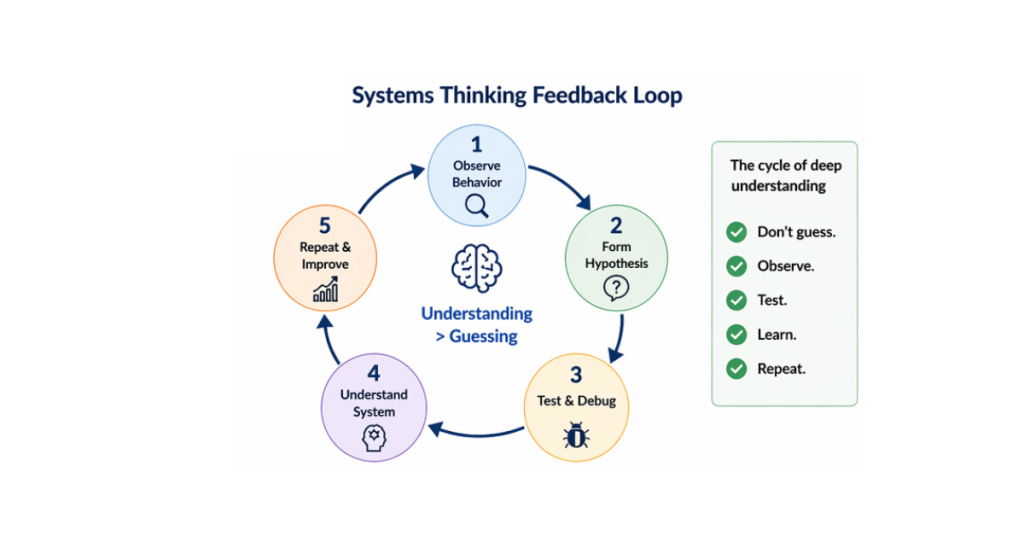
Step through your code using a debugger and understand how data moves through memory and functions.
Go beyond syntax. Understand how memory is managed, how objects are created, and how behaviour is resolved at runtime.
Instead of patching issues, take time to understand why they occur. This builds long-term skill.
Implement basic data structures or simplified versions of systems to understand how they work internally.
Frameworks change. Core principles like memory, data flow, and system behaviour do not.
If you can clearly explain why something works, you understand it properly.
Consistent small actions matter more than occasional deep work.
Strong developers tend to:
Many developers don’t improve because they:
These habits create short-term productivity but limit long-term growth.
Improvement isn’t linear.
Developers often feel stuck until they build a deeper understanding of how systems behave.
Once that shift happens, progress becomes faster and more consistent.
The difference isn’t time spent coding — it’s how deeply you understand what you’re doing.
To become a better software developer, most people focus on learning new frameworks, tools, or languages.
But real improvement doesn’t come from writing more code.
It comes from understanding how that code actually works.
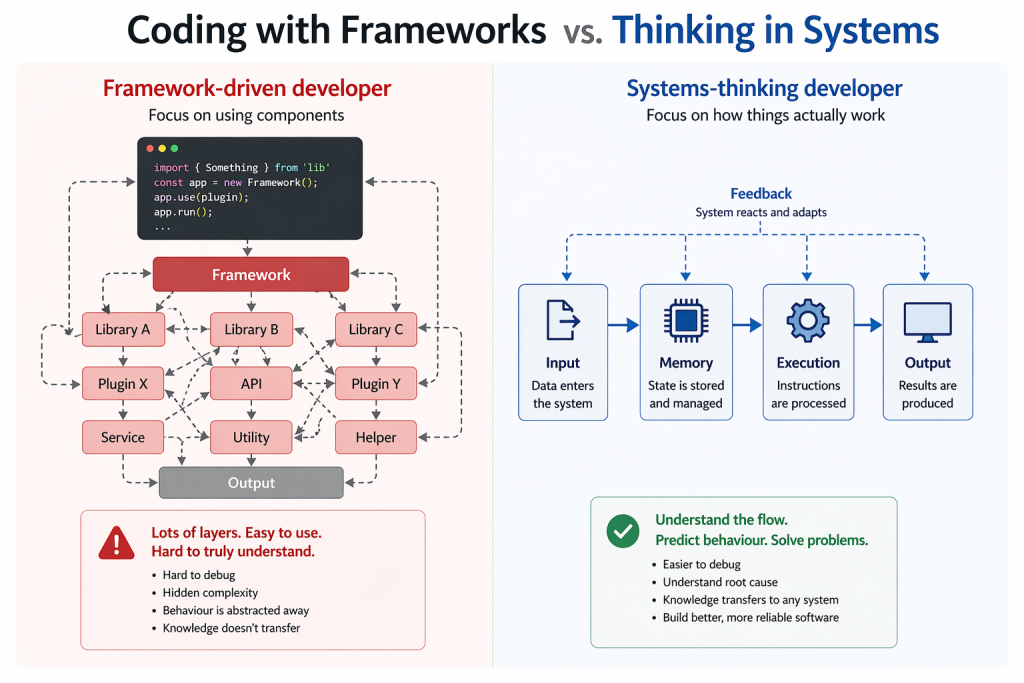
Modern software development is built on powerful abstractions. Frameworks, managed runtimes, and high-level languages. They make it possible to build complex systems quickly.
But they also hide what’s really happening underneath.
And that’s where things start to break down.
Developers can become productive without actually understanding how their code behaves.
That gap is what holds people back.
Most developers learn how to write code.
Fewer learn how that code actually works.
They learn:
That’s enough to ship features.
But it’s not enough to consistently solve problems in complex systems.
Strong developers understand things like:
They don’t just follow patterns.
They understand what’s happening underneath them.
A lot of developers hit the same wall.
They’re productive. They can build things. But when something behaves unexpectedly, progress slows down fast.
It usually comes back to how they learned.
It’s easy to:
But when something breaks, that surface-level understanding isn’t enough.
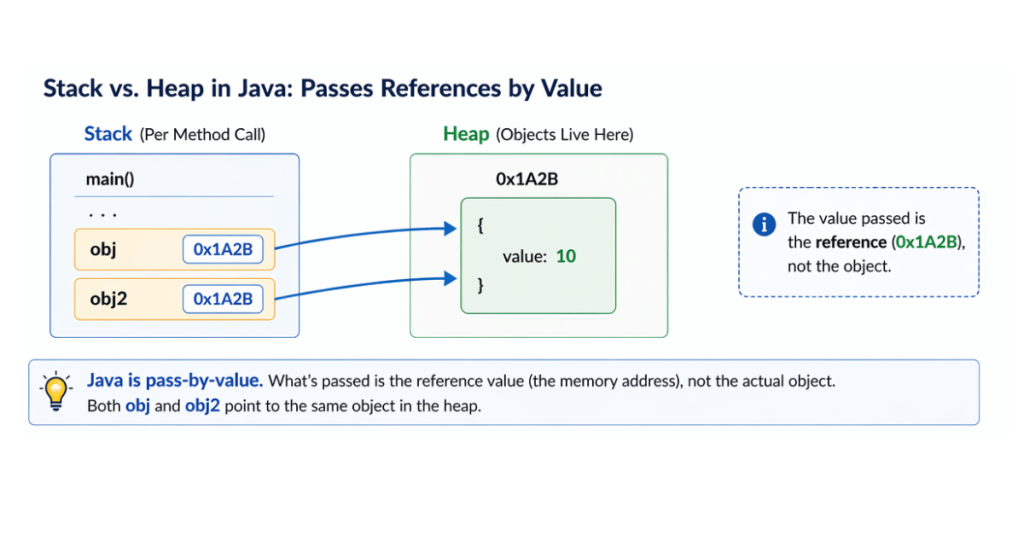
This is a good example of why understanding fundamentals matters.
This catches a lot of developers out.
Java is always pass-by-value. But many developers think it’s pass-by-reference.
What’s actually happening is that the value being passed is a reference to an object.
H3: Why this is confusing
Without understanding:
…it feels inconsistent.
Most developers have hit this moment. Something should work… but it doesn’t. And it’s not obvious why.
Once you understand the underlying model, it becomes predictable.
For developers who want to go deeper into this, the
Java fundamentals covered in this course:
https://mallon.associates/courses/java-in-depth/
Break this down in detail.
Frameworks help you move faster.
But they also hide complexity.
That’s where you start hearing:
“It’s just magic.”
It isn’t.
It’s just behaviour that hasn’t been understood yet.
That kind of knowledge doesn’t transfer well.
Change the framework, and everything feels new again.
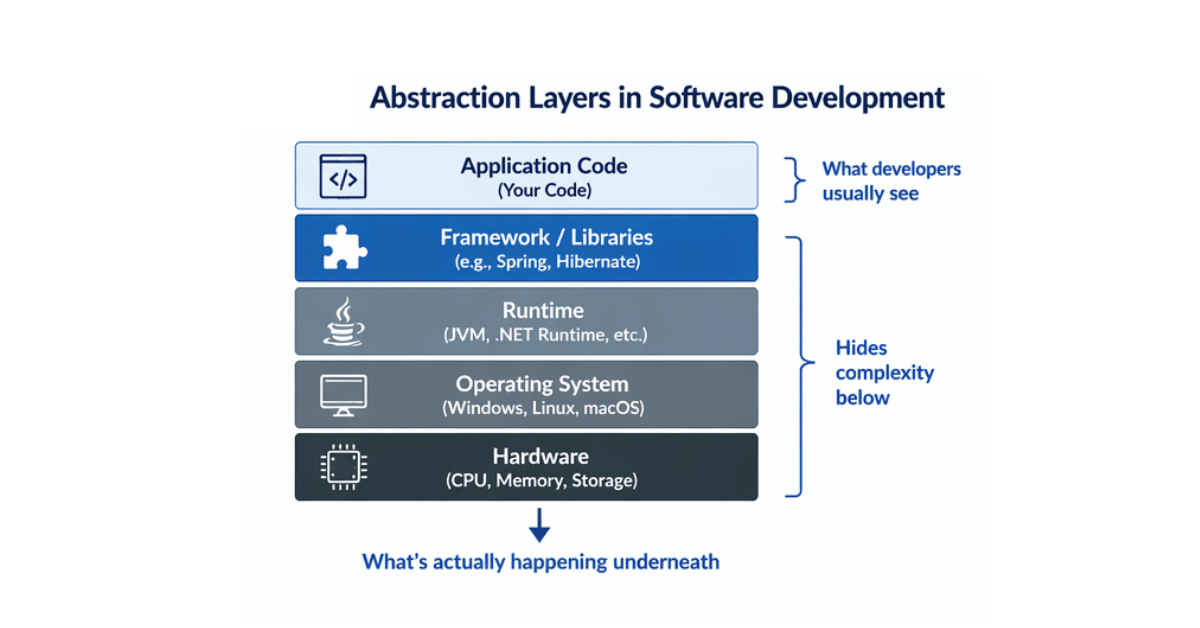
The real shift happens when you stop focusing on syntax and start thinking in systems.
Developers who understand these ideas don’t just learn faster.
They adapt when things change.
In most environments, this gap is manageable.
In banking and fintech, it isn’t.
This is where surface-level knowledge becomes a real constraint.
This isn’t just about individual developers.
It becomes a team problem very quickly.
That slows everything down.
Understanding system behaviour takes structured support.
Developers who focus on understanding rather than just writing code:
They’re not just productive.
They’re effective.
This is something we see a lot in banking and fintech teams.
Developers can build features. But when systems become complex, understanding becomes the bottleneck.
At Mallon Associates, the focus is on building that deeper capability.
Practitioner-led programmes focus on real-world system understanding.
Our specialist instruction targets specific technical gaps in teams.
Our knowledge documentation approach helps reduce reliance on tribal knowledge.
For individuals looking to strengthen fundamentals:
Introduction to Java Programming
If you want to become a better software developer in a structured way, this kind of foundational understanding needs to be built deliberately.
That’s where guided learning and real-world application make the difference.
For developers and teams looking to improve but still struggling with complex systems, that’s usually a sign the fundamentals aren’t fully in place.
You don’t fix that by adding more tools.
You fix it by improving understanding.
Learn more about how we approach this: https://mallon.associates/our-approach/
Or speak to us directly: https://mallon.associates/contact/
It means understanding how systems behave, not just writing code. Strong developers can reason about debugging, performance, and trade-offs.
Yes. Frameworks improve speed, but fundamentals improve understanding. Without fundamentals, knowledge becomes fragile.
Because most learning focuses on tools and patterns rather than underlying principles like memory and runtime behaviour.
By focusing on system behaviour. Debugging deeply, understanding runtime, and learning from first principles.
Yes. Tools change constantly, but fundamentals don’t. Developers who understand them adapt faster.

Michael Clarke is the Chief Executive Officer at Mallon Associates. With over two decades of experience, including deep technical expertise in C/C++, Java, and complex proprietary frameworks, Michael now focuses on technical leadership and scaling engineering operations for financial services firms. He is a recognised expert in developer onboarding strategy, dedicated to bridging the gap between high-level technology and sustainable business growth.